
-
Your shopping cart is empty!
CBShop about cbradio
Posted By: Marcel van Minnen
Published: 02/12/2022
Comments: 0
CBRADIO
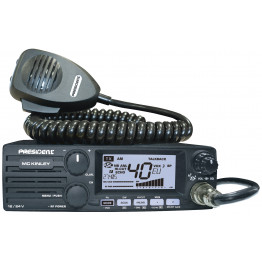
CBRadio, or Citizens Band Radio, is a type of two-way radio used by the general public for short-distance communication. It is a popular form of communication used by truckers, hobbyists, and emergency personnel. CBRadio operates on a set of 40 channels located in the 27MHz band. Each channel is a one-way transmission, meaning that only one user is allowed to talk at a time. In order to compensate for this, many CB users have adopted a "radio etiquette" where users take turns using the channel. In addition to its use for short-distance communication, CB radio has also been used for emergency communication. During natural disasters or other emergencies, CB radio can be used to communicate with authorities or other affected individuals. It can also be used to coordinate relief efforts. CBRadio has been around since the 1940s, but its popularity waned in the late 1970s and early 1980s when it was replaced by other forms of communication such as cell phones and the internet. In recent years, however, CBRadio has seen a resurgence in popularity due to its portability and ease of use. CBRadio is an invaluable tool for truckers, hobbyists,
MODULATION
CBRadio modulation is a type of modulation used primarily in two-way radio communications. It stands for Continuous Band Radio modulation. It is a modulation technique used in Frequency Modulation (FM) and is similar to Frequency Shift Keying (FSK). In CB radio, the signal is modulated by a change in the radio frequency. The signal is transmitted over a limited range, typically between 5 and 30 miles, depending on terrain and the power of the transmitting antenna. CB radios are used for short-range communications in various applications, such as business, recreational, and emergency services.
11 METER RADIO
11 Meter Radio is a form of amateur radio communication that allows people to communicate with each other over a short-range frequency. It is a two-way radio system that uses a frequency band of 11 meters, which is between 26.95 MHz and 27.41 MHz. 11 meter radio has been around since the early 1920s. It was initially developed by amateur radio operators who wanted to communicate with each other without having to rely on professional radio services. 11 meter radio can be used for a variety of purposes, including making contacts with other amateur radio operators, exchanging messages and participating in emergency communications. It can also be used for recreational purposes such as talking to friends and family, or just listening to what others are saying. 11 meter radio requires a transmitter and receiver, which can be either a base station or a mobile station. A base station is a radio station that is located at a fixed location and can be used to transmit and receive signals from a distance. A mobile station, on the other hand, is a portable radio that can be used to communicate with other stations while it is being moved. 11 meter radio is an important part of the amateur radio world, as it provides an opportunity for people to communicate without having to rely on
10 METER RADIO
The 10-meter Amateur Radio Band is a portion of the high frequency (HF) spectrum that is allocated to amateur radio operators around the world. It is the largest amateur radio band, spanning 28.0 to 29.7 MHz. It is often referred to as the “Magic Band” because of its unique propagation characteristics. The 10-meter band is generally considered a good band for DX (distance) contacts as it can provide reliable, long-distance propagation over short to medium distances. On this band, it is possible to communicate with other amateur radio operators located thousands of miles away. During periods of enhanced propagation, such as during solar flares or other atmospheric disturbances, the 10-meter band can provide worldwide contact opportunities. The 10-meter band is the most popular band for DXers because of its good signal propagation and its wide coverage. It is also popular for long-distance contests, such as the ARRL 10 Meter Contest, CQ World Wide DX Contest, and the ARRL Sweepstakes. In order to make the most of the 10-meter band, it is important to have the right equipment. A good 10-meter transceiver is essential, as it will allow you to transmit and receive signals over the band

USB LSB
The USB and LSB 10 meter amateur radio is an exciting device used by those who want to stay connected with other amateur radio operators. It is a two-way radio that can transmit and receive signals across a wide range of frequencies and distances. The USB and LSB 10 meter amateur radio is a two-way radio that is capable of transmitting and receiving signals across a wide range of frequencies and distances. It is designed for use with amateur radio operators. The USB and LSB 10 meter amateur radio is capable of transmitting and receiving signals on both the upper and lower sideband frequencies. This type of radio is commonly used for long-distance communications, such as between two radio operators who are located in different parts of the world. The distance that the USB and LSB 10 meter amateur radio can reach varies depending on the conditions and terrain involved. Generally, the radio has an effective range of up to 10 miles, depending on the conditions. This distance can be increased with the use of an antenna and other factors. The radio also has a limited ability to penetrate obstacles like trees and buildings, making it ideal for use in rural and wooded areas. The USB and LSB 10 meter amateur radio is a great tool for amateur radio operators who want to stay connected with other operators. It offers a reliable and efficient way of communicating over long distances, while also allowing operators to maintain a connection with each other in a variety of locations. The USB and LSB 10 meter amateur radio is a great tool for those who wish to make their hobby even more exciting and enjoyable.

